

But mesh is not a “set and forget” add-on. Its real value depends on choosing the right type, fixing it correctly, and checking it as conditions change.
What is scaffolding mesh, and what does it actually do?
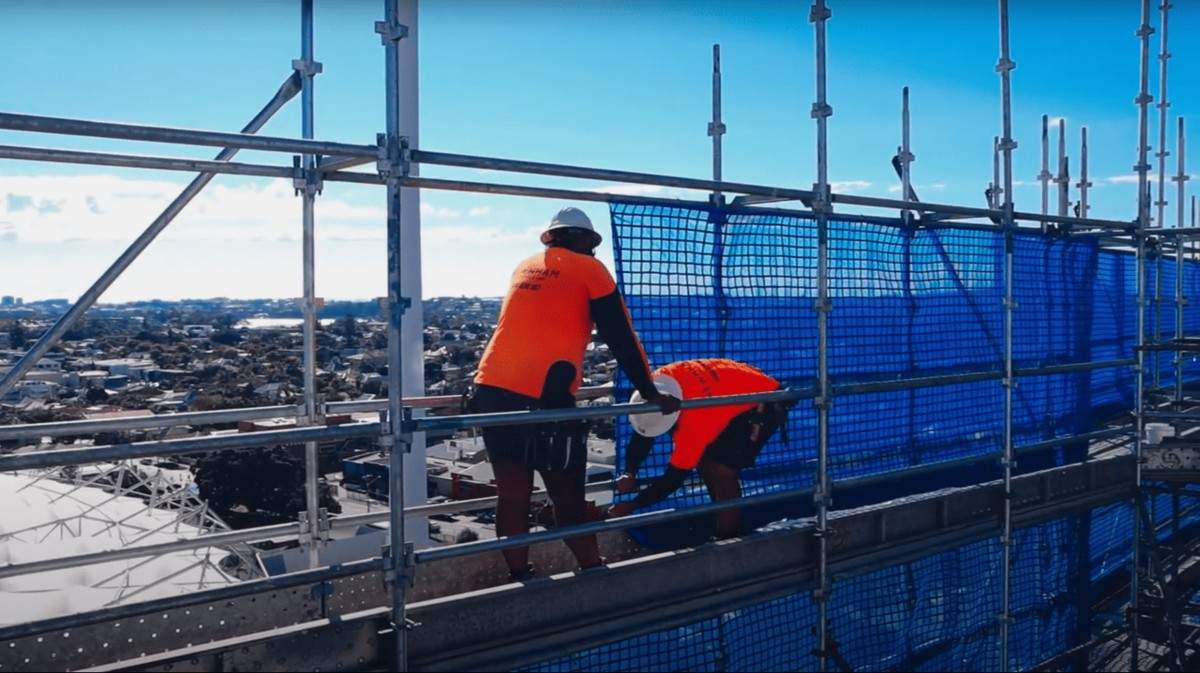
Scaffolding mesh is a protective fabric fixed to the outside of scaffolding to control debris, dust, and visual exposure. It also helps define the work zone so the public and adjacent properties are less affected by the project.
Most mesh is designed to be permeable to air, which reduces wind loading compared with solid sheeting. Even so, it still changes how wind interacts with the scaffold, so the whole system must be assessed with the mesh in place.
Why is scaffolding mesh used on construction and renovation sites?
It is used to reduce the chance of tools, fixings, and small debris escaping the working platform area. It is also used to limit nuisance from dust and light debris during cutting, grinding, demolition, and façade works.
Sites also use mesh to improve privacy and appearance, especially in busy streets. When it is well fitted, it makes the scaffold look “contained,” which can lower public concern and reduce complaints.
How does scaffolding mesh protect workers on the scaffold?
It helps by creating a secondary barrier that can catch or slow small falling items before they drop beyond the scaffold line. That reduces the chance of dropped objects striking workers on lower lifts, people on loading bays, or crews working close to the façade.
Mesh can also reduce distraction from wind-blown dust and minor debris. That said, it does not replace toe boards, brick guards, debris netting where required, or proper housekeeping on platforms.
How does scaffolding mesh protect the public at street level?
It reduces the likelihood of minor debris leaving the scaffold footprint and reaching pavements, driveways, and neighbouring land. On high-traffic frontages, that extra containment can be the difference between a controlled site and a constant risk zone.
Mesh also improves “readability” of the boundary. People walking past can more easily understand where the work area is, especially when mesh is combined with clear signage, lighting, and properly planned pedestrian routes.
What types of scaffolding mesh are available, and how do they differ?
Most options vary by weave density, strength, and intended use, such as dust control versus debris containment. Higher-density mesh can reduce dust migration more effectively, but it can also increase wind resistance compared with lighter mesh.
Flame-retardant mesh is common on commercial sites and may be required by client standards or project rules. UV-stabilised mesh can also matter on longer projects, because sun exposure can weaken cheap materials earlier than expected.
How should they choose the right mesh for a specific project?
They should start with the site’s main risk: falling debris, dust, privacy, or a mix of all three. Then they should match mesh rating and density to that risk, rather than buying the heaviest roll and assuming it is “safer.”
They should also consider location and season. A windy coastal frontage, a tall independent scaffold, or a project exposed above rooflines may need a different approach, including partial coverage, stronger ties, or alternative controls.
Does scaffolding mesh increase wind loading, and why does that matter?
Yes, it can. Even breathable mesh changes airflow, which can increase drag and alter how the scaffold behaves in gusts, especially on tall elevations or corner returns.
That matters because stability relies on a complete system, including ties, base conditions, and bracing. If mesh is added after the scaffold is designed, or if it is changed mid-project, they can unintentionally create a higher-risk structure without meaning to.
How should scaffolding mesh be installed so it stays secure?
It should be fixed with suitable ties or clips at the spacing recommended by the mesh supplier and scaffold designer. Fixings should be consistent, tensioned properly, and positioned so the mesh does not flap excessively in wind.
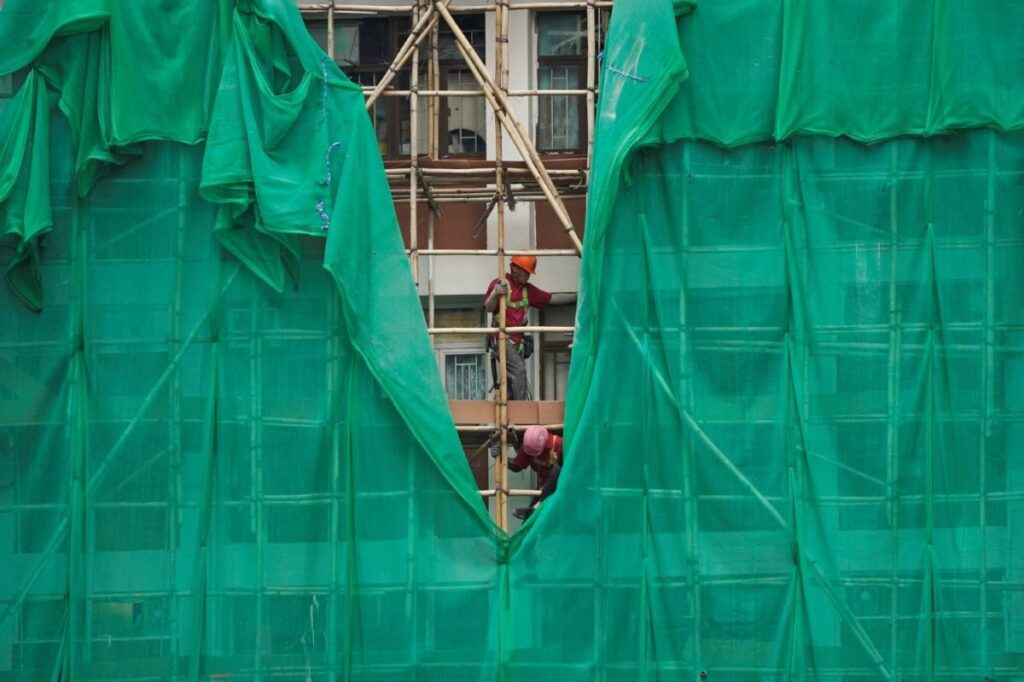
Edges and corners need extra attention because they are common failure points. If the mesh is loose, torn, or “ballooning,” it should be re-tensioned or replaced, not patched in a way that creates new snag or tear lines. For a clearer understanding of reinforcement materials, explore this guide on reo bar sizes, grades, and their role in modern construction.
What common mistakes make mesh less effective or more dangerous?
A frequent mistake is installing mesh without reassessing ties, especially when covering large uninterrupted areas. Another is using too few fixings or mixing incompatible fasteners that degrade in sunlight or snap under repeated movement.
Poor housekeeping can also defeat the point of mesh. If platforms are cluttered, or small items are left unsecured, mesh becomes a last resort rather than part of a controlled system that prevents drops in the first place.
What inspections and maintenance should they plan during the job?
They should check mesh routinely and after high winds, heavy rain, or significant changes to the scaffold. They should look for tears, failed fixings, loose edges, and sections rubbing against sharp corners that can cut through the fabric.
Any change to coverage, such as adding mesh to a new lift or removing sections for loading, should be controlled and recorded. If the mesh condition is uncertain, they should treat it as compromised and repair or replace it promptly.
How does scaffolding mesh fit with other safety controls?
Mesh works best as one layer in a wider system that includes toe boards, brick guards where needed, debris netting where specified, and properly designed fans or gantries over public walkways. It should complement exclusion zones, signage, and good lifting plans.
They should also align mesh use with how materials are moved on and off the scaffold. If loading bays, hoists, or rubbish chutes are in use, mesh openings should be planned so operatives do not create ad-hoc gaps that stay open for days. You may like to visit https://www.safework.nsw.gov.au/hazards-a-z/scaffolding to get more about safe scaffolding work.
What is the simplest way to get scaffolding mesh right from day one?
They should treat mesh as part of the scaffold design, not a cosmetic extra. That means selecting the right product, confirming wind and tie implications, installing it with consistent fixings, and inspecting it like any other safety-critical component.
When mesh is planned properly, it helps protect workers above and below, and it reduces risk to the public without turning the scaffold into a wind sail. That is the goal: safer work, fewer incidents, and a site that feels controlled from the street.
FAQs (Frequently Asked Questions)
What is scaffolding mesh and how does it enhance safety on construction sites?
Scaffolding mesh is a protective fabric attached to the outside of scaffolding structures to control debris, reduce dust drift, and limit visual exposure. It helps define the work zone boundaries, reducing the risk of falling objects and improving safety for workers and the public nearby.
Why is choosing the right type of scaffolding mesh important for a project?
Selecting the appropriate scaffolding mesh depends on the site’s main risks such as falling debris, dust control, or privacy needs. Matching mesh density and rating to these risks ensures effective protection without unnecessarily increasing wind loading or compromising scaffold stability.
How does scaffolding mesh impact wind loading on scaffolds and why does this matter?
Even breathable scaffolding mesh alters airflow around the scaffold, increasing drag and changing how it reacts to gusts. This affects scaffold stability, especially on tall or exposed structures, making it essential to assess and design the scaffold system with mesh installation in mind.
What are best practices for installing scaffolding mesh securely?
Scaffolding mesh should be fixed using suitable ties or clips at intervals recommended by suppliers and scaffold designers. Proper tensioning and consistent fixing prevent flapping or ballooning in wind. Special attention is needed at edges and corners to avoid tears or failure points.
How should scaffolding mesh be maintained during a construction project?
Regular inspections are necessary, especially after high winds or heavy rain, to check for tears, loose fixings, or damage from sharp edges. Any compromised sections should be promptly repaired or replaced. Changes in coverage must be controlled and documented to maintain safety integrity.
In what ways does scaffolding mesh complement other site safety measures?
Scaffolding mesh works as part of a comprehensive safety system that includes toe boards, brick guards, debris netting where required, exclusion zones, signage, and proper material handling plans. Together, these controls minimize falling-object hazards and protect both workers and the public effectively.
